By 2050, green technology will redefine logistics across the UAE and Saudi Arabia in ways that go far beyond cleaner vehicles or reduced emissions. The gulf region is already one of the fastest-moving areas in sustainability transformation, with national agendas such as UAE Net Zero 2050 and the Saudi Green Initiative reshaping how transport, warehousing, and last-mile delivery will operate. For companies like Transcorp that already serve thousands of customers across the region with temperature-controlled, cross-border, and last-mile solutions, the next decades will be an era of accelerated innovation where sustainability becomes a strategic advantage rather than an optional upgrade.
The shift begins with fleets. EVs and hydrogen-powered delivery vehicles are expected to dominate local and regional transport in the GCC. The UAE has already deployed over 800 public EV charging stations, while the KSA through its NEOM and Vision 2030 mobility strategies is building one of the world’s largest hydrogen ecosystems. Today, an electric van in Dubai might cover deliveries within the city efficiently, but by 2035, a hydrogen-powered long-haul truck could travel from Jeddah to Riyadh or from Abu Dhabi to Dubai with zero emissions and minimal downtime. Transcorp International, which specializes in temperature-controlled deliveries, will benefit from next-generation refrigeration units powered by onboard renewable systems, allowing pharmaceuticals, fresh food, and frozen goods to stay perfectly stable during deliveries. This reduces emissions, eliminates fuel leakage risks, and lowers operational costs which are all critical advantages in highly regulated sectors.
Warehousing will undergo an equally dramatic transformation. Solar-integrated fulfillment centers will become the regional norm by 2050, especially across Dubai South, Riyadh’s Industrial City developments, and Abu Dhabi’s KEZAD. Already, Dubai’s large logistics hubs use rooftop solar arrays to offset power consumption, but the next era will move toward fully net-zero facilities using AI-driven cooling systems, greywater recycling, and energy storage that automatically balances usage between peak and off-peak hours. For a company like Transcorp International, which operates cold-chain warehousing and temperature-sensitive environments, the adoption of phase-change materials, biomass-powered chillers, and CO₂-based refrigeration will drastically reduce electricity footprint while maintaining ultra-consistent product quality in the UAE and KSA’s intense climate.
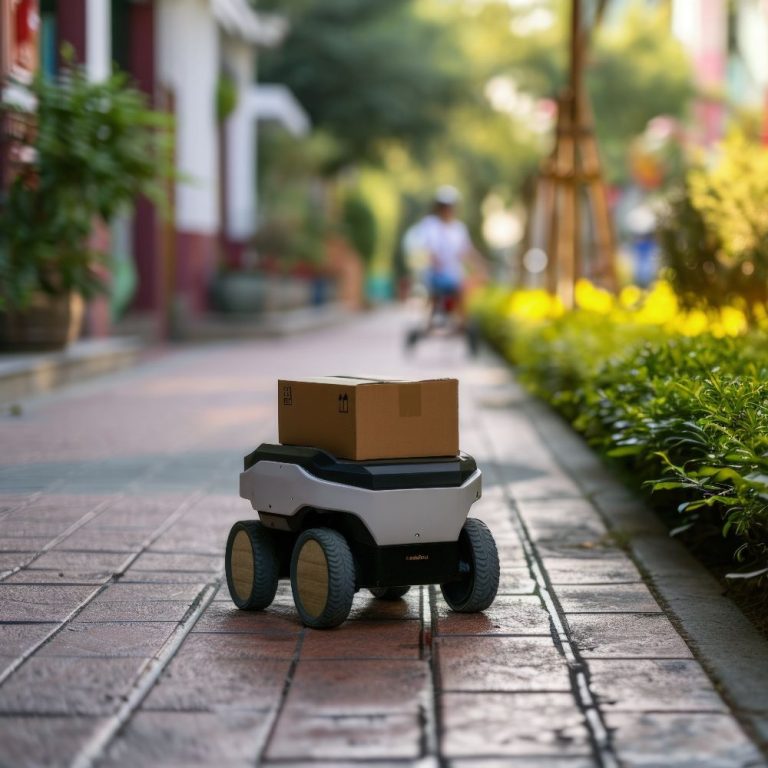
The logistics landscape of 2050 will also be shaped by automation. We rely on digital mapping but when the time comes expected to be by 2050 communication will happen via smart roads and traffic algorithms. A temperature controlled vehicle (van or even truck) could adjust speed and route based on solar intensity, or a shipment could be handled by an autonomous truck that balances energy efficiency and delivery time with millisecond decisions. In the UAE, drone delivery trials are already underway and by 2050, drones will handle urgent medical, pharmacy, and small deliveries. For example, a drone could deliver a temperature-controlled pharmaceutical package from a Transcorp warehouse to a healthcare clinic in under ten minutes, with zero road congestion and zero emissions. Saudi Arabia, through NEOM’s next-gen mobility framework, is developing autonomous delivery grids that integrate with warehouses, roads, and drone corridors — creating a fully sustainable, automated logistics pipeline. Packaging will also undergo a green revolution. Plastics used today in eComm and food deliveries will be almost fully extinguished, replaced by bio based materials and reusable box cycles. Expectations are shifting toward eco conscious packaging and by integrating circular packaging loops we could significantly reduce waste, cut material costs, and position Transcorp as a sustainability forward logistics leader in the UAE and KSA.
The most profound change, however, will be cultural. Sustainability will not be a column in annual reports; it will be an operational requirement for licensing, government approval, and customer acquisition. Regulatory bodies in the UAE and KSA are steadily introducing frameworks that reward low-emission fleets, green warehouses, and transparent ESG reporting. By 2050, companies will likely need to demonstrate carbon-neutral supply chains to partner with major retailers, pharmacies, FMCG brands, and global manufacturers. Transcorp International, by adopting green mobility, energy-efficient warehousing, and automated route optimization early, will not only reduce its carbon footprint but also achieve stronger market positioning, lower long-term operating cost, and higher trust from businesses and consumers who increasingly value sustainable delivery partners.
Green technology is not a future concept for the GCC as its foundations are already visible today. The next 25 years will accelerate these shifts until sustainability becomes the core of logistics infrastructure across the UAE and KSA. Companies that adapt now will thrive in 2050’s competitive landscape, and Transcorp’s positioned to become one of the region’s leaders in green, efficient, and technology-driven logistics.
References
SGI Initiatives-Saudi & Middle East Green Initiatives. (n.d.). Saudi & Middle East Green Initiatives. https://www.sgi.gov.sa/sgi-initiatives
Saudi Green Initiative. (n.d.). Saudi Vision 2030. https://www.vision2030.gov.sa/en/explore/projects/saudi-green-initiative
Masdar. (2024, May 15). UAE announces Net Zero by 2050 strategic initiative. Masdar. https://masdar.ae/en/news/newsroom/uae-announces-net-zero-by-2050-strategic-initiative
The UAE’s Net Zero 2050 Strategy | the official platform of the UAE Government. (n.d.). https://u.ae/en/about-the-uae/strategies-initiatives-and-awards/strategies-plans-and-visions/environment-and-energy/the-uae-net-zero-2050-strategy